



This year’s third cohort of the “Interdisciplinary Training for the Protection of Human Dignity – with a Focus on Child Protection” program at Sapientia College of Theology of Religious Orders has come to a close. During the first semester of 2026, 58 participants engaged in six intensive training weekends as well as numerous individual assignments, deepening their understanding of the protection of human dignity, the prevention and management of abuse, and the creation of safe communities. A total of 23 participants successfully completed the program and received certificates.
The program is the Hungarian adaptation of the blended-learning course offered by the Institute of Anthropology – Interdisciplinary Studies on Human Dignity and Care (IADC), affiliated with the Pontifical Gregorian University in Rome. At the same time, the Sapientia program seeks to provide a broader and more detailed approach than the original curriculum. Its content extends beyond the recognition and handling of sexual abuse to examine the theological, psychological, pedagogical, legal, communicative, and communal dimensions of human dignity. In addition to abuse involving children, the program focuses on all forms of human relationships and institutional settings in which boundary violations, abuses of power, or violations of dignity may occur. Beyond the transmission of knowledge, the training places strong emphasis on skills development, attitude formation, individual and group learning, and the spiritual and faith-based integration of the topics addressed.
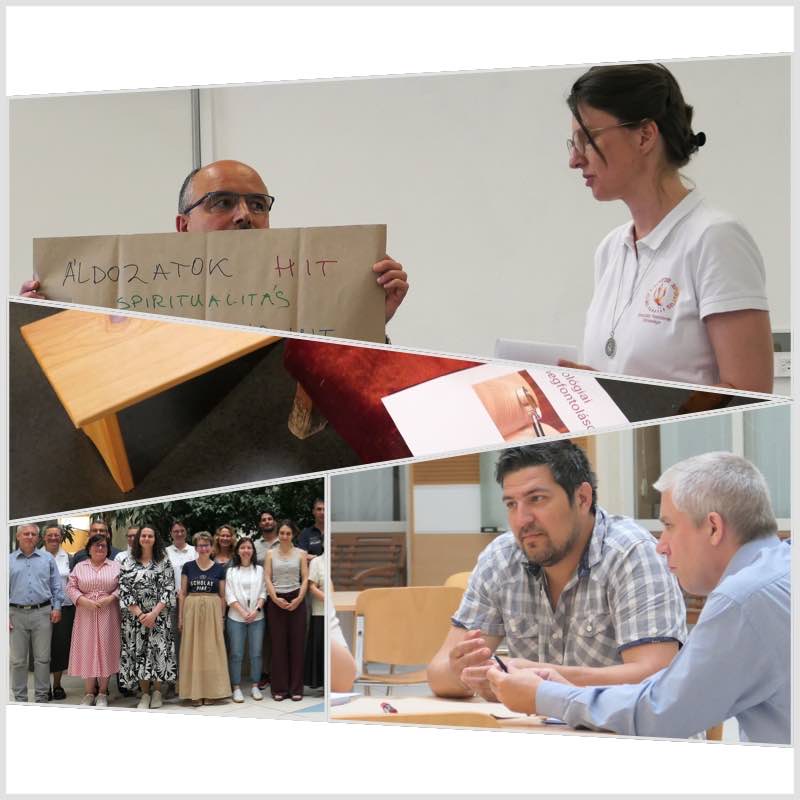
A frequently asked question is: why must we continue to talk about abuse again and again? Participants shared the conviction that the issue cannot be avoided, as it affects our communities, institutions, and personal relationships alike. The program also emphasizes an important shift in perspective: it is not enough merely to react to problems once they arise. The goal is for the Church, as well as all human communities, to become genuinely safe places. Prevention, awareness, and a culture of responsibility play a crucial role in achieving this objective.
One of the cohort’s particular strengths was the diversity of its participants. The group included teachers, social-service professionals, communications specialists, religious educators, youth ministry workers, educational administrators, law-enforcement personnel, and Church representatives—including priests, religious sisters and brothers, and lay collaborators. Participants serving in both leadership and non-leadership roles learned together, creating a particularly rich environment for dialogue and the exchange of experiences.
With the completion of this third cohort, a total of 58 participants in Hungary have now graduated from the 120-hour program. The training will be offered again in the coming academic year. Details regarding applications are available on the website of Sapientia College of Theology of Religious Orders.